Request Quote
Oops! Something went wrong while submitting the form.

Complex structural designs demand more than routine concrete placement, which is why engineering-led planning becomes essential from the earliest stages. Each decision influences how safely and efficiently concrete moves through the structure.
These projects often involve tight reinforcement, irregular shapes, elevation changes, and challenging layouts. Without proper preparation, the risks of pressure issues, blockages, or structural stress increase quickly during pumping.
This article explains how structural complexity affects pumping, the engineering checks required, the equipment choices involved, and the pressure and safety strategies needed to deliver reliable outcomes across complex Melbourne building sites.
Structural complexity affects how concrete pumping must be planned and executed, especially when working with curved formwork, tight reinforcement, deep foundations, or multi-level layouts. Each feature alters how concrete flows, how pressure builds, and how easily the pump line can navigate through the structure.
These conditions increase the need for precise routing, careful hose control, and an engineered understanding of friction loss and placement behaviour. Even small changes in geometry or reinforcement spacing can influence flow stability.
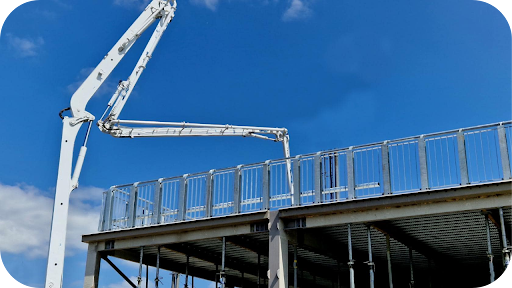
Because the structure demands tighter tolerances, every choice from mix design to pump setup must be engineered to prevent blockages, segregation, pressure spikes, or uneven placement.
Effective pumping for complex structures relies on solid engineering checks that prevent risks before they arise. Here are the essential considerations for safe, accurate pumping.
Engineers assess how formwork will handle placement pressure, accounting for slump, density, temperature, and pour rate. Proper bracing ensures the form remains stable and capable of supporting continuous pumping without movement or structural stress.
Mix design must support smooth flow through tight reinforcement while maintaining structural strength. Engineers evaluate slump, aggregate size, and workability additives to achieve consistent placement that avoids segregation or blockages inside congested structural elements.
Engineers review access constraints, pump positioning, and routing paths to reduce bends, limit friction loss, and maintain clear operator visibility. Planned routing ensures concrete moves efficiently through the system and avoids unnecessary flow interruptions.
Dense reinforcement limits available clearance and increases flow resistance. Engineers adjust aggregate sizing or recommend self-compacting concrete to maintain smooth placement and ensure proper coverage and alignment around reinforcement throughout the structural element.
Temperature and weather affect concrete behaviour during pumping. Engineers consider heat, wind, and moisture to select suitable admixtures, adjust placement timing, and maintain workable concrete that performs reliably in complex structural environments.
The right pumping setup ensures concrete flows smoothly through complex structural layouts and tight site conditions. Here are the key equipment choices that support accurate, efficient pumping.
Line pumps work well in tight sites and long horizontal runs, while boom pumps suit elevated or obstructed areas. Engineers assess access, reach, and complexity to match the pump type to the structural conditions.
High-rise pumping requires carefully designed systems such as static lines, climbing frames, and tower booms. These setups reduce pressure loss, maintain steady flow, and help operators manage demanding vertical pumping conditions safely and efficiently.
Engineers compare pump capacity with the structural layout, line length, and concrete mix to select suitable output levels. Correct pressure matching ensures consistent flow, prevents blockages, and supports accurate placement within complex structural elements.
Line diameter influences pressure, flow rate, and pump efficiency. Engineers select steel or rubber lines based on distance, bends, reinforcement density, and required control, ensuring concrete moves smoothly without unnecessary friction or risk of blockage.
Specialised tools such as tremie hoses, flexible ends, and small placement booms help guide concrete into confined areas. These tools provide better accuracy, allowing operators to maintain consistent placement in complex structural forms with limited access.
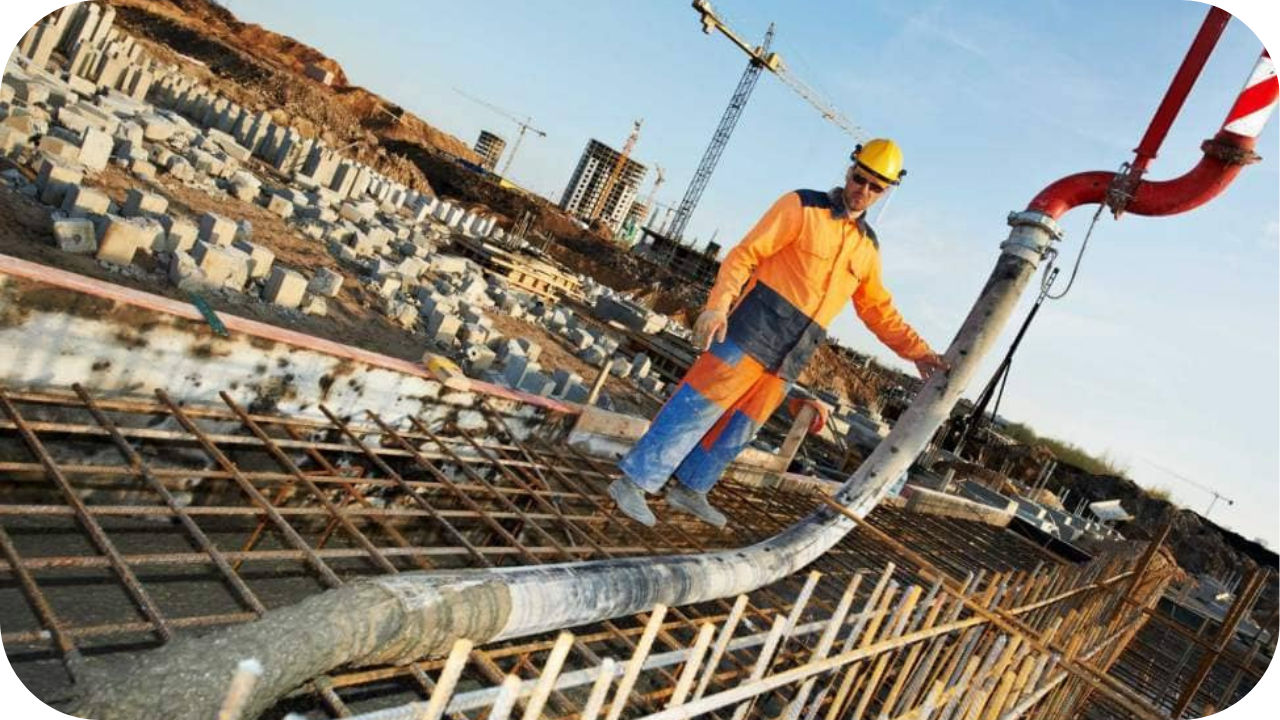
Engineers calculate pressure based on horizontal distance, vertical rise, friction loss, bends, and reducers. Accurate pressure estimation ensures the pump delivers enough force to move concrete reliably through complex pathways without creating unsafe surges or flow instability.
Careful line planning reduces bends, avoids unnecessary elbows, and controls diameter changes. Correct sequencing and smooth routing limit friction points, helping concrete move consistently while preventing the blockages that often occur in tight structural configurations.
Proper priming creates a smooth internal surface that supports stable flow. Slurry or eco prime mixtures help concrete transition cleanly into the line, reducing segregation and preventing early blockages during initial pumping.
Engineers plan the correct pump speed to avoid air pockets, surging, or inconsistent pressure. Proper flow management ensures concrete moves steadily through critical sections, supporting accurate placement in constrained or complex structural areas.
Pressure behaviour shifts when concrete moves between vertical rises and horizontal runs. Engineers anticipate these transitions, adjusting routing and pump settings to maintain stable flow while preventing pressure dips or spikes that could disrupt controlled placement.
Complex structural forms need precise placement methods to protect formwork and concrete quality. Here are the pouring strategies that ensure safe, controlled, and consistent results.
Engineers manage lift height, pour rate, and placement sequence to prevent excess pressure on formwork. Controlled layering ensures even distribution, reduces structural stress, and creates a stable base for the next lift within complex form shapes.
Correct vibration removes air pockets and supports full consolidation around dense reinforcement. Operators choose internal or external vibration depending on access, ensuring the concrete bonds well and avoids honeycombing or voids within the structural form.
Temperature affects workability, set time, and pumping performance. Engineers adjust pour timing, select suitable admixtures, and apply weather protocols to maintain consistent behaviour, especially when placing concrete in confined or insulated structural areas.
Vertical and deep elements require controlled filling and gradual lift progression. Engineers monitor flow behaviour, prevent segregation, and maintain alignment to ensure uniform strength and structural continuity throughout each confined or heavily reinforced zone.
When work is interrupted, engineers plan joining methods to maintain bond strength. Proper timing, vibration, and surface preparation reduce the risk of weak interfaces forming between successive concrete layers in complex structural areas.
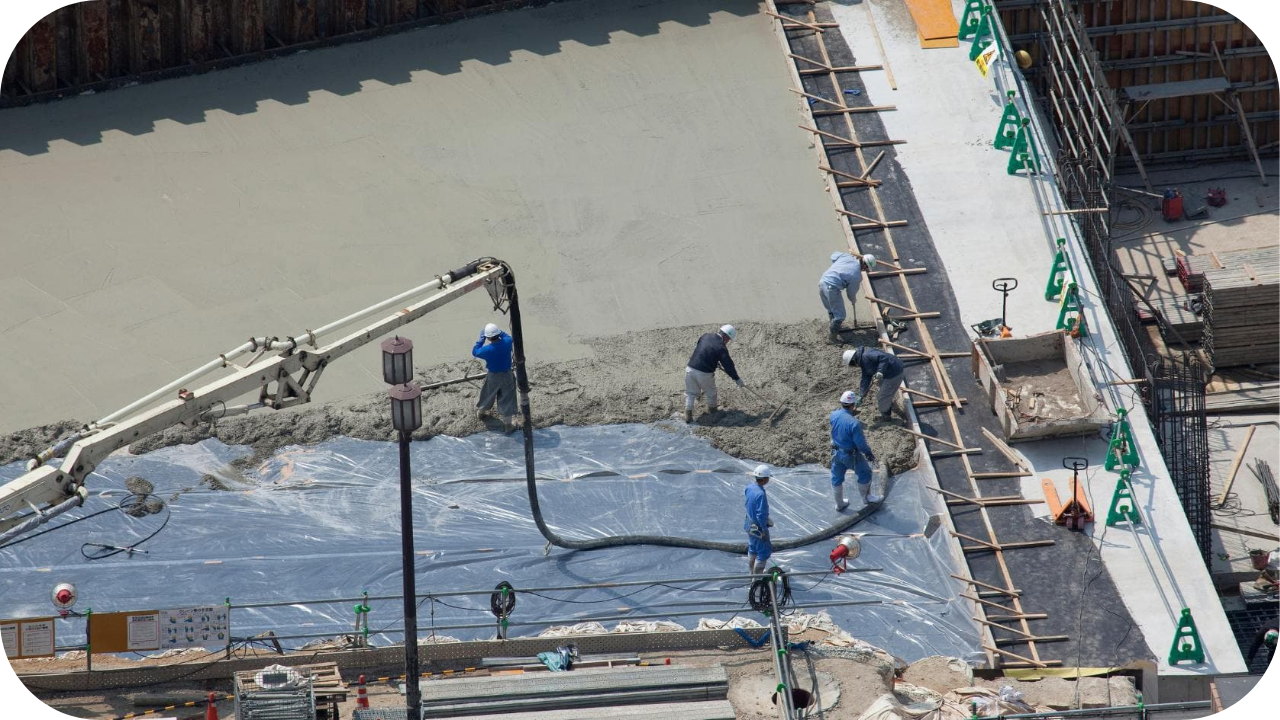
Complex structures introduce risks that must be managed early to prevent delays or structural issues. Here are the engineering risks to watch for, along with methods to reduce them.
Safety is critical when pumping concrete into complex structures with tight access and high-pressure demands. Here are the essential safety protocols that support controlled, reliable pumping.
Complex structural projects require thoughtful planning, precise pressure control, and reliable equipment selection to ensure concrete moves safely through each form. Every engineering step adds certainty and reduces risks during demanding placement conditions.
With the right strategies, teams maintain concrete quality, protect formwork, and support strong structural outcomes across challenging sites. Coordination among operators, engineers, and concreters remains essential for consistent, dependable results.
If you need pumping expertise for complex structural work, contact Urban Pumping for safe, accurate, and reliable concrete placement.