Request Quote
Oops! Something went wrong while submitting the form.

Retaining walls play an important role in stabilising soil, managing slopes, and improving drainage across Melbourne’s residential suburbs. Strong footings are essential, and concrete pumping is a reliable way to place them accurately and consistently.
Many suburban blocks have narrow access, slopes, and obstacles that make traditional placement slow and difficult. Pumping allows contractors to work efficiently while maintaining quality in reinforced trenches and piers.
This article covers why pumping is suitable for retaining wall footings, how to choose the right pump, key engineering checks, and techniques that support stable, long-lasting results.
Retaining wall footings often sit in narrow, sloped, or obstructed areas that demand precise placement. Here are the main reasons concrete pumping is the preferred method for residential footing work.

Choosing the right pump ensures accurate footing placement on residential sites with varied access and ground conditions. Here are the key considerations that guide pump selection.
Line pumps perform well on narrow blocks, long trench layouts, and sites needing extended hose routing. They provide controlled placement in confined suburban areas, making them ideal for most residential retaining wall foundations and bored piers.
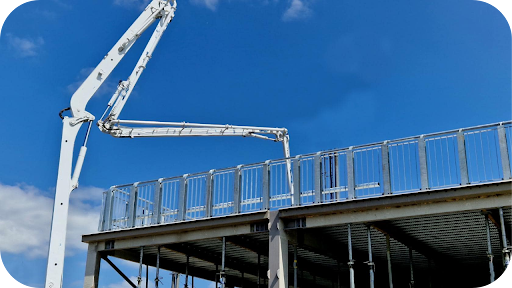
Boom pumps offer superior reach for trenches behind buildings, raised ground, or steep slopes. Their overhead access ensures safe placement where hoses cannot be laid directly along the footing line.
Selecting the correct pump size depends on trench depth, soil type, reinforcement layout, and required pressure. This ensures steady flow, controlled discharge, and consistent placement throughout the footing pour.
Pump selection depends on driveway width, boundary clearances, ground stability, and safe truck positioning. Proper evaluation ensures effective pump operation and clear hose routing along the trench alignment.
Dense steel cages or narrow trenches may need smaller aggregates, flexible hose ends, or specific pump types. Matching equipment to reinforcement conditions prevents blockages and maintains smooth flow during placement.
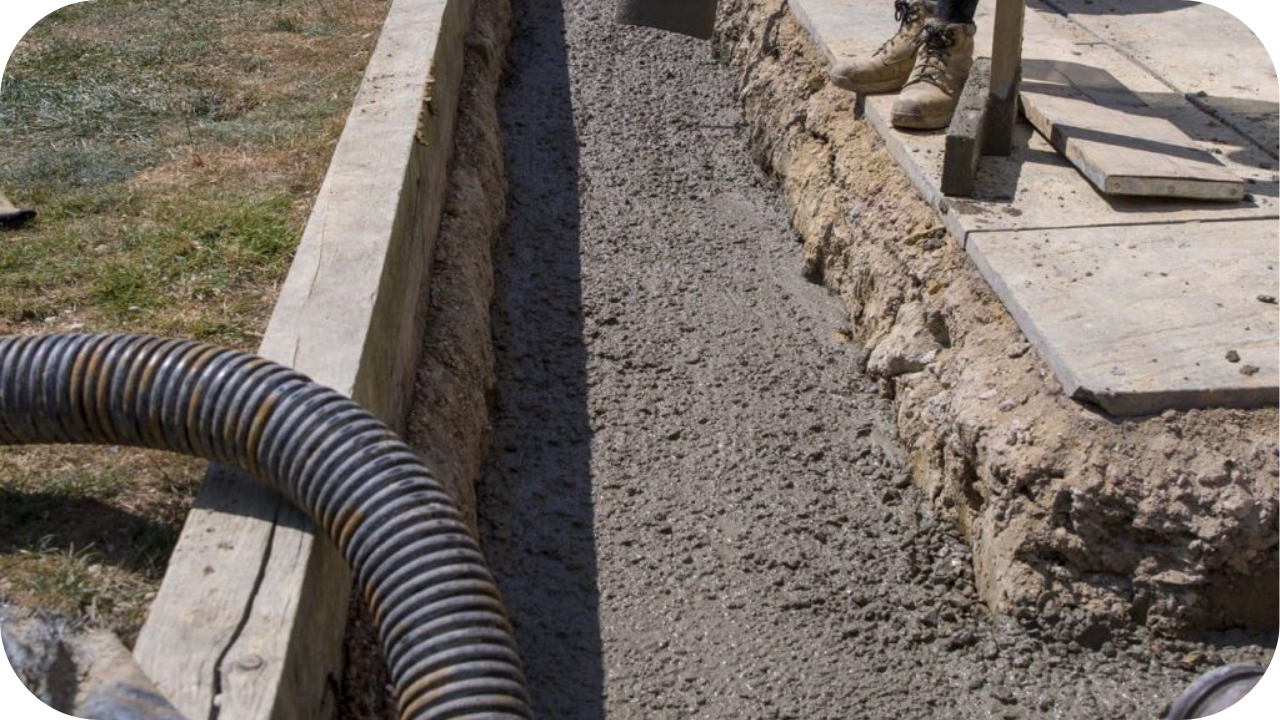
Strong retaining wall footings rely on engineering checks that prevent failures during pumping and placement. Here are the essential considerations that ensure safe, efficient, and structurally sound footing pours on residential sites.
Engineers study trench depth, width, steel placement, pier spacing, and concrete volume requirements. This ensures the pump setup, hose routing, and placement plan align with structural specifications and prevent errors during footing pours.
Selecting the right slump, aggregate size, and admixtures supports smooth flow through narrow or reinforced trenches. Engineers tailor the mix to maintain workability and strength while preventing blockages during extended footing placement.
Crews establish truck pads, stabilise ground, and map hose routes to support safe operation. Clear staging areas prevent movement hazards and allow pumps to operate effectively on sloped or tight suburban blocks.
Engineers plan dewatering, install trench protection, and coordinate timing with excavation teams. Proper management prevents trench collapse, reduces contamination, and supports smooth placement even in wet or unstable soil conditions.
Engineers and crews align pumping schedules with excavation progress and steel placement to avoid delays. Proper coordination ensures trenches remain clean, stable, and ready for concrete, preventing contamination or collapse before placement begins.
Retaining wall footings require careful placement to protect trench stability and reinforcement coverage. Here are the pumping techniques that ensure smooth, accurate, and consistent results on Melbourne sites.
Controlling pour speed prevents trench blowouts and keeps concrete evenly distributed along the footing. Operators guide the hose steadily, maintain alignment with the trench base, and adjust flow to protect trench walls while achieving uniform depth and coverage.
Deep or narrow piers rely on slow, steady filling to prevent voids and maintain reinforcement coverage. Operators often use tremie hoses to guide the mix from the bottom up, improving consolidation and reducing trapped air in confined pier spaces.
Proper vibration ensures concrete settles around reinforcement and avoids honeycombing. Operators coordinate vibration with hose movement, maintain consistent lift depth, and finish the footing accurately to create a solid and level base for the retaining wall.
Sloped or restricted trenches need controlled flow to avoid washing out edges or displacing soil. Operators adjust hose angle, slow the discharge rate, and maintain steady movement to protect trench integrity and achieve even placement.
Where footings include both trenches and piers, operators adjust flow when moving between sections. Careful hose positioning ensures consistent filling, supports uniform reinforcement coverage, and avoids weak points where the two structural elements meet.
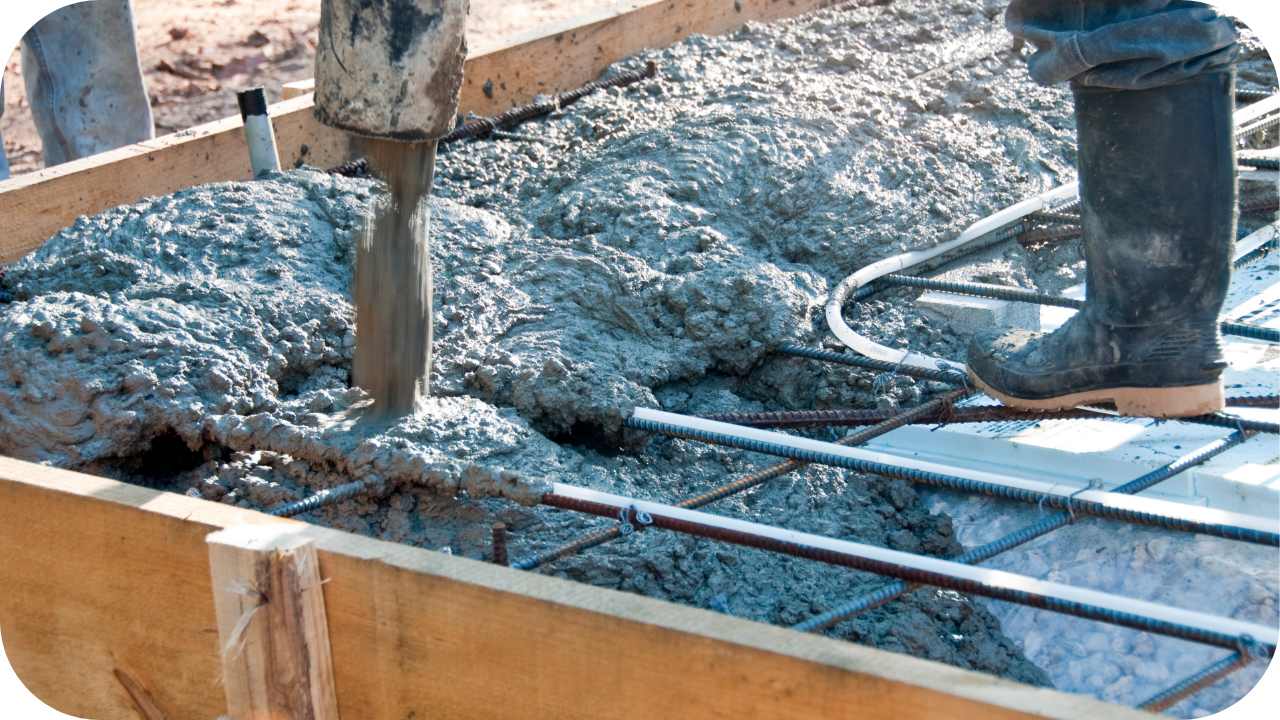
Retaining wall footing pours often present real on-site challenges that affect flow, timing, and safety. Here are the common issues crews face and the techniques that help manage them effectively.
Tight side paths, boundary fences, and garden obstacles require strategic pump positioning and longer hose runs. Operators guide the hose carefully, control flow speed, and plan routing to maintain accuracy without disturbing surrounding structures.
Dense steel cages slow concrete flow and raise blockage risk. Operators refine slump, use suitable aggregate sizing, and guide the hose steadily to help concrete move smoothly around reinforcement while maintaining proper coverage and consolidation.
Melbourne’s unpredictable weather affects workability and the set time. Operators adjust mix behaviour with admixtures, monitor temperature shifts, and coordinate placement and vibration to maintain consistency during hot, cold, wet, or windy conditions.
Water in the trench or collapsing edges can disrupt placement. Crews manage groundwater removal, use trench shields where required, and maintain steady flow to avoid washouts and achieve uniform footing depth across unstable ground.
Extended trench runs or sharp layout changes demand coordinated hose control and pacing. Operators adjust flow during direction changes, maintain steady movement, and ensure even distribution to prevent weak spots along complex footing paths.
Residential retaining wall projects require accuracy, reliability, and tight access. Here are the reasons homeowners and builders across Melbourne consistently trust Urban Pumping for their footing pours.
Strong retaining wall footings rely on accurate concrete placement and controlled flow. Pumping improves outcomes by navigating tight access areas and delivering concrete exactly where consistent footing strength is needed.
With correct pump selection, careful engineering checks, and steady placement techniques, builders and homeowners achieve durable retaining walls across Melbourne while reducing placement risks and improving overall footing performance levels.
For expert support and reliable footing pours on your retaining wall project, contact us today and secure dependable, professional results.